What is an Open Space Unconference?
A conference turned inside out
An unconventional way to run a conference — and once you have tried it, you will never want to go back.
An unconference is a participant-driven event: you decide which topics you want to talk about and work on, and with whom — instead of hoping that a speaker will touch on your question somewhere in a slide deck.
Open Space is the specific unconference format we use. It starts with an empty schedule: no times set, no rooms allocated, no topics mandated, and no separation between “speakers” and “audience”. All participants create the programme together by proposing, planning, holding and reflecting on sessions.
The short version
-
✔ It is about conversations that matter
Bring your own burning questions, listen to those of others, join plenty of discussions and hands-on sessions, and get even smarter than you already are — together.
-
✘ It is not about speakers and slides
There is no call for papers, no keynote and no audience. There are plenty of great conferences to apply to as a speaker — SoCraTes just is not one of them.
How an open space day unfolds
Every open space day at SoCraTes follows the same simple rhythm — created from scratch, every morning, by everyone in the room.
-
1 — Marketplace
The day starts with your ideas
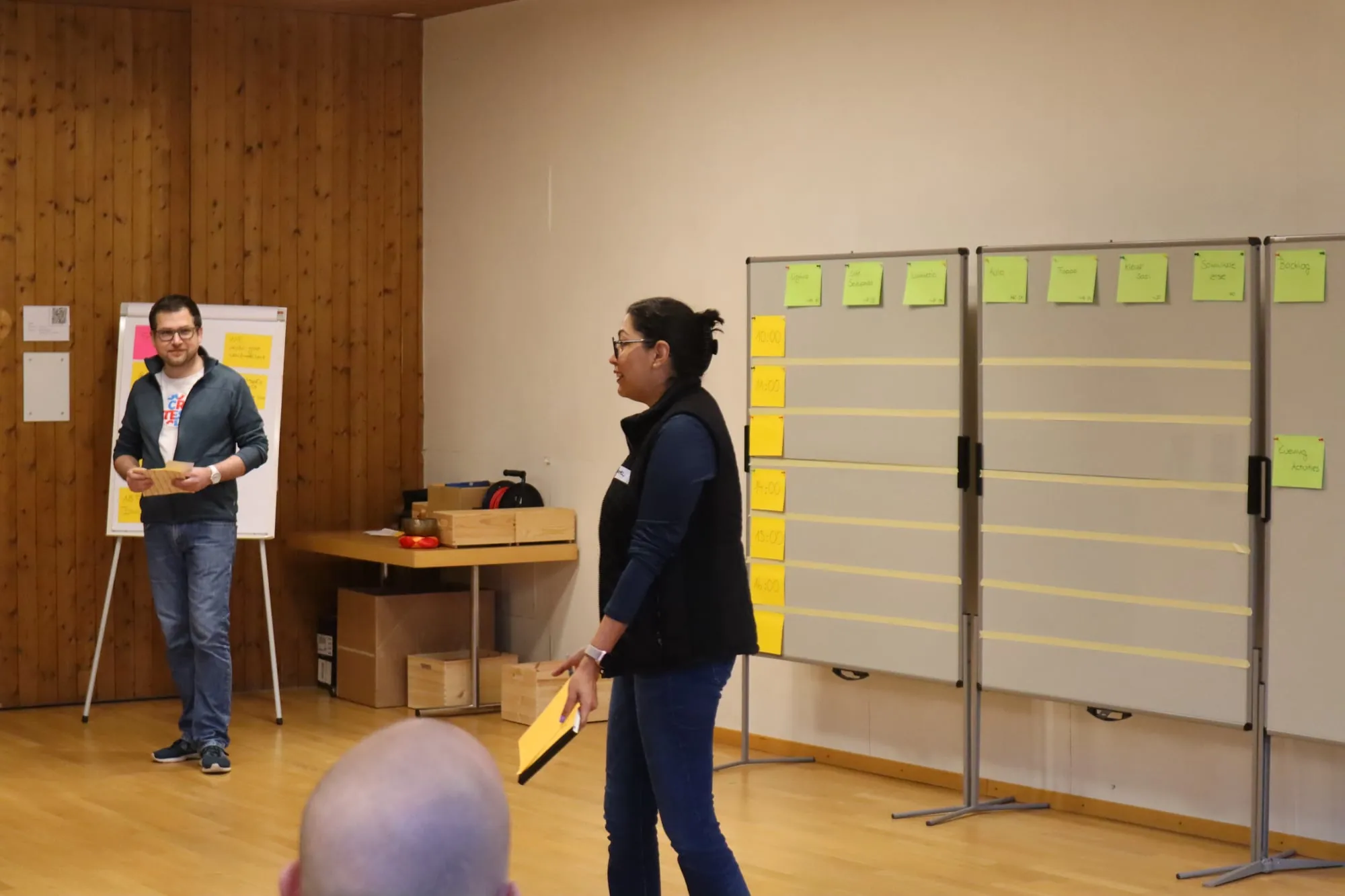
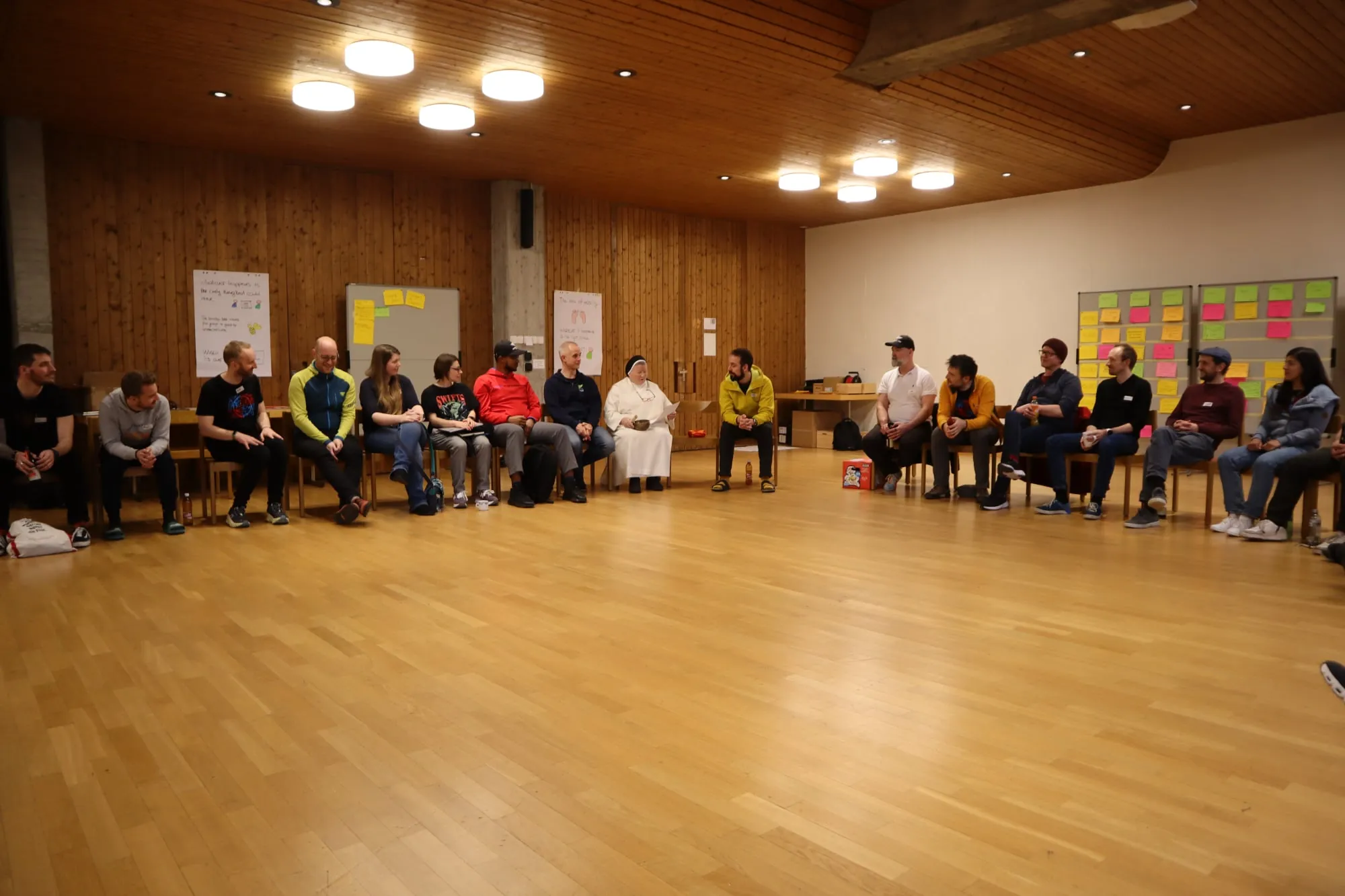
Everyone gathers in a circle. Whoever wants to, steps forward and pitches a topic: a question, a discussion, a coding exercise, something to teach — or something they want to learn.
-
2 — The schedule emerges
Topics go on the board
Each topic is pinned to the “space–time matrix”, a big board of rooms and time slots that becomes the ad-hoc schedule for the day. Minutes later, a full conference programme exists that nobody planned in advance.
-
3 — Sessions
Discuss, code, learn
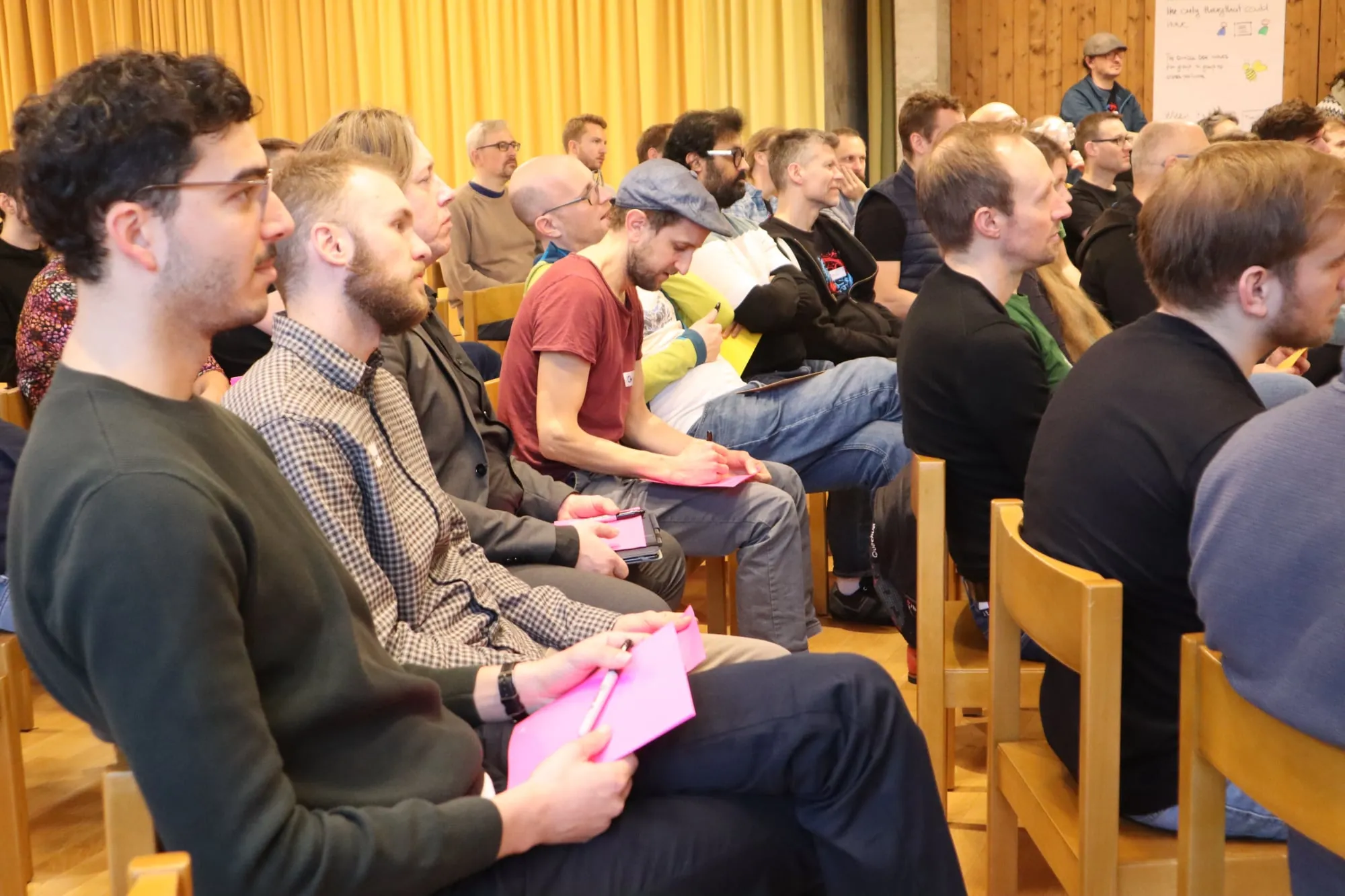
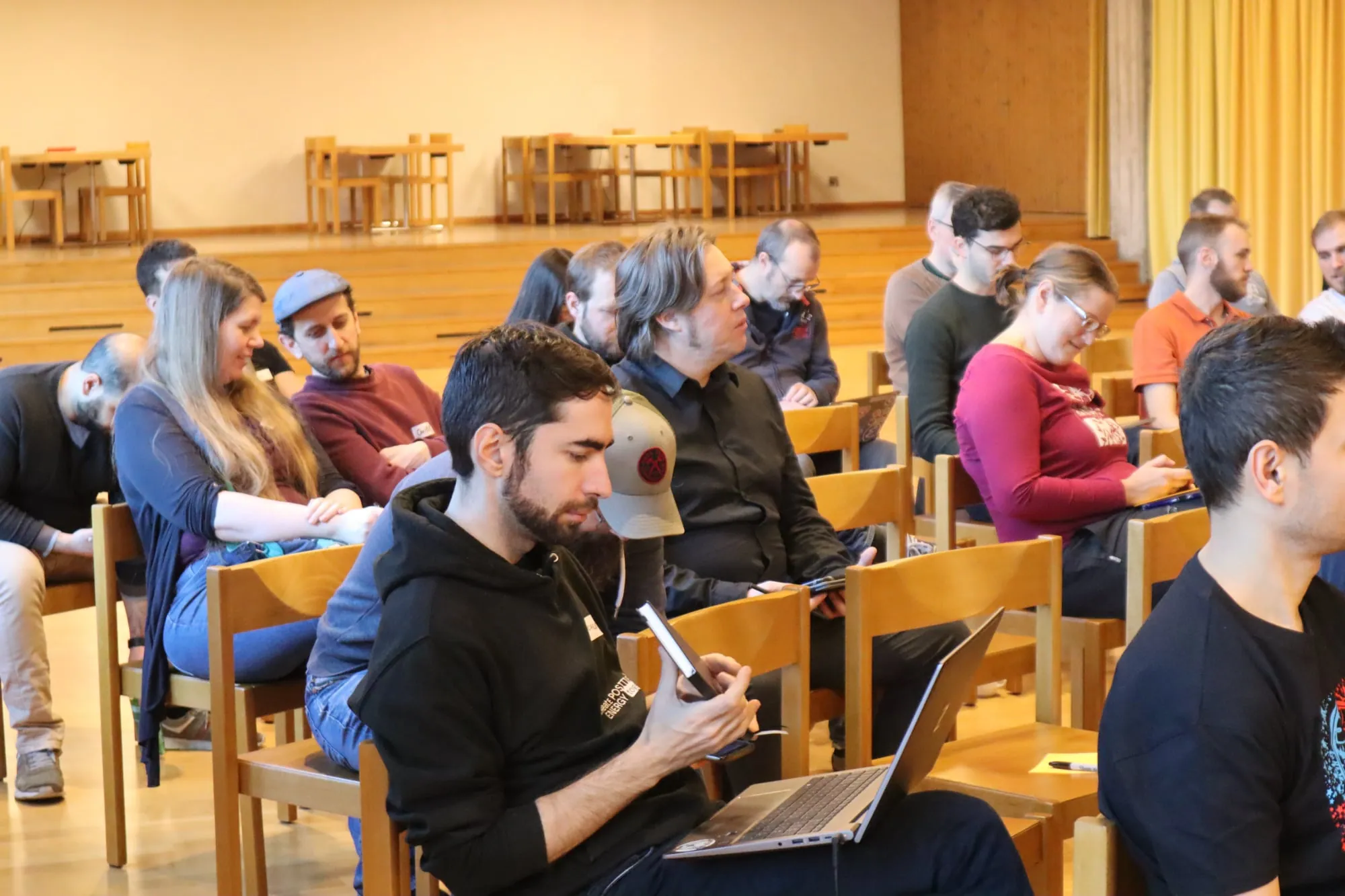
Sessions run in parallel throughout the day: discussions, live coding, mob programming, testing katas, architecture debates, career conversations — whatever the marketplace produced. Groups are small, so everyone participates.
-
4 — Breaks and shared meals
The hallway track is part of the format
Coffee breaks, lunch and dinner at the monastery are where sessions continue and new ones are born. All meals are included, so nobody has to leave a good conversation to find food.
-
5 — Evenings
Self-organised until late
Ad-hoc sessions, pair hacking, board games, music, a walk under the alpine night sky — the evenings belong to the participants, just like the days.
The five Open Space principles and one law
Open Space works because of a handful of simple rules. They sound almost too easy — and that is exactly why they work.
-
Whoever comes is the right people
You do not need the CEO and a hundred attendees to get something done — you need people who care. And those are exactly the people who show up in a session.
-
Whenever it starts is the right time
Spirit and creativity do not run on the clock. Sessions begin when the conversation does.
-
Wherever it happens is the right place
A seminar room, the garden, a corridor sofa — space for a good conversation opens up everywhere, all the time.
-
Whatever happens is the only thing that could have
Once something has happened, it is done. No fretting about the session that might have been — move on to the next conversation.
-
When it’s over, it’s over
Some topics resolve in ten minutes, others need the whole day. When the conversation is finished, move on — do the work, not the time.
The Law of Mobility: if at any time you find yourself in any situation where you are neither learning nor contributing: go someplace else.
What this means at SoCraTes Conference Switzerland
We arrive together on Thursday — most participants take the train from Zurich as a group — and open the conference with a welcome evening at Kloster Ilanz. Friday and Saturday are two full open space days: the marketplace each morning, sessions all day, and self-organised evenings. On Sunday there is room for optional half-day workshops before we travel home. The timeline has the details.
Because everything is created by the participants, it matters who feels invited: software developers, testers and crafters who care about improving the way we build software. You do not need to prepare anything, and you do not need to be an expert — your questions are just as valuable as your answers. First time at an open space? You will be surprised how quickly it feels natural.
Curious what comes out of it? Browse the session notes from previous editions in our wiki.